What is a brand?
That's a great question and one that many people struggle to explain.
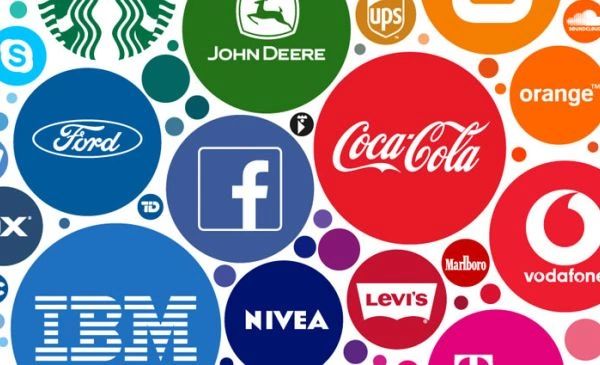
The term “brand” was first used by cattle ranchers to identify their animals by burning an identifying mark into them. Think of all those movies with the evil villain approaching the hero with a red-hot branding iron. In the late 1800s, packaged products like Coca-Cola started taking off and brands were used to differentiate these products and companies from the competition. Of course, not using a branding iron, but instead using identifying marks, colors, and names to identify the brand.
But over time, marketers realized there was more to the brand of Coca-Cola than just a non-generic name. It's how consumers perceive the product. When you think of Coca-Cola, what do you think of? Is it the company logo? The red and white color scheme? The iconic glass bottles? The television and radio jingles? The Coca-Cola Santa Claus? All of the above? If I were to ask you, how would you describe Coca-Cola?
David Ogilvy, the “Father of Advertising,” defined brand as “the intangible sum of a product’s attributes.” For a more standard definition, the dictionary defines brand as “a person’s perception of a product, service, experience, or organization.”
It may be easier to explain what a brand is not. Marty Neumeier, author and speaker on all things brand, defines brand by first describing what a brand is not. He states: “A brand is not a logo. A brand is not an identity. A brand is not a product.” Neumeier continues that “a brand is a person’s gut feeling about a product, service, or organization.” It's their perception.
So, now that I've discussed what a brand is, and is not, we come to the question that is also the title of this blog. What is your brand? I don't mean what kind of beer do you drink, or what kind of cigarettes you might smoke, or what car you drive. I'm referring to you, personally. What is your brand? How do people perceive you?
I remember being asked this same question a number of years ago by a friend, peer, and mentor. I don't remember the specifics of the conversation or how we came to this point, but she turned and looked at me and asked me this question. "So tell me Mike, what's your brand?" I sat with a dumbfounded look on my face and for one of the few times in my life, I was speechless. She continued "Your personal brand, the brand that people think of when they think of you is just as important as the brand of any company. More so for you personally. So, if I were to say your name 'Mike Marriage', what words would you use to describe yourself? How do people perceive you? More importantly, how do you want people to perceive you? What do you want YOUR brand to be?"
At the time, I could not come up with an answer. I reflected on our conversation for a long time, struggling to describe myself. To articulate my brand. I asked family, friends, peers, colleagues, etc., what they thought of when they heard my name. Filtering out the feedback that I cannot repeat here, what remained was the emergence of a few key words. Innovator. Leader. Mentor. Communicator. These were the qualities or attributes that people shared most often to describe me. This is how people perceive me. This is my brand.
From that moment forward, every action that I took, and take, is made to reinforce and protect that brand. My brand is just as important to me as the Coca-Cola brand is to the Coca-Cola Company. Training that I take, positions that I accept, speeches that I deliver, interactions that I have, are all made with my brand in mind. I promote my brand on my website, on my resume, on my LinkedIn profile, in my bio, etc. The same way that a marketer would promote and protect the Coca-Cola brand, so too do I promote and protect my brand.
So once again I pose the question to you, what's your brand?
Wishing you all the best
Mike
Continue exploring

January 27, 2026
What We Leave Behind in Ordinary Moments
For a long time, I thought kindness was something you decided to do. A conscious choice. A moment where you step up, do the right thing, and move on feeling pretty good about yourself. But the longer I pay attention, the...

October 28, 2025
The Art of Saying No
There’s a special kind of chaos that comes from saying “yes” too often. It’s the chaos that has you answering Slack messages at 9:47 p.m. while pretending to watch Ted Lasso for “self-care.” It’s the chaos that fills you...
September 3, 2025
Too Tired to Inspire, Too Stubborn to Quit
(Sometimes heroic effort looks like just getting out of bed.)