PLG + AI: When Your Product Sells Itself… and Teaches You How
August 13, 2025
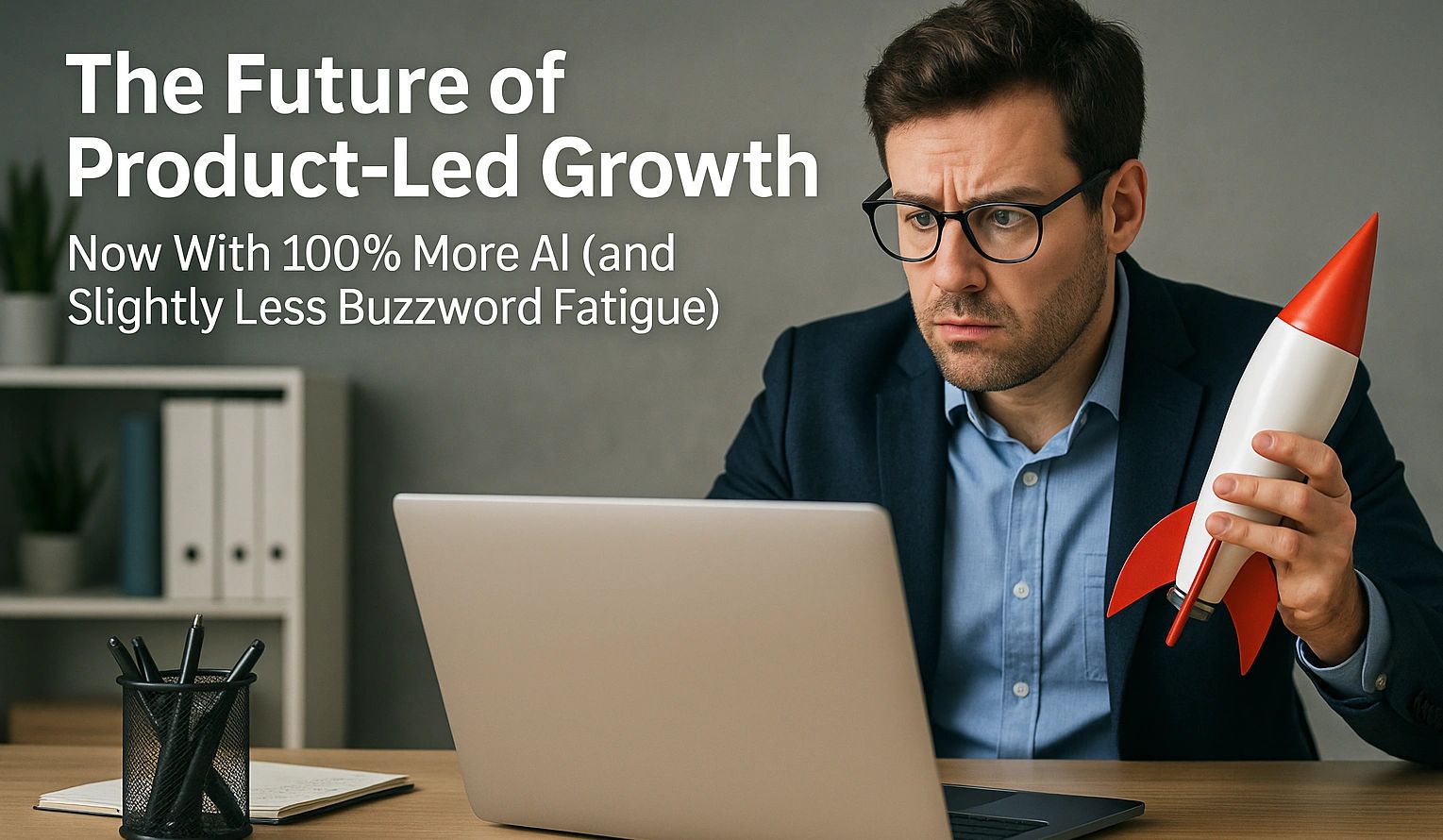
If you’ve been anywhere near a SaaS leadership meeting, a venture capital memo, or a LinkedIn scroll session in the last five years, you’ve probably heard the phrase Product-Led Growth enough times to make you suspicious that it might just be the new “synergy.” (gags) And while it certainly gets tossed around with that same slightly over-caffeinated enthusiasm, PLG is far from hype. In fact, it’s increasingly becoming the growth strategy for SaaS companies, especially in a world where users expect to try before they buy. Buyers don’t want to talk to sales reps until they’re good and ready, and patience for clunky onboarding has been reduced to the approximate attention span of a goldfish.
But as we round the corner into the next generation of SaaS, something interesting is happening. PLG is evolving. It’s no longer just about slick onboarding flows and “aha!” moments buried behind feature walls. The future of PLG is smarter, more personalized, more automated, and, yes, much more AI-infused.
So if you’re a product leader, a growth marketer, an AI enthusiast with a product addiction, or just someone who enjoys long blog posts with mildly sarcastic subheadings then buckle up because we’re going deep.
What is Product-Led Growth Again? (Asking for a Friend)
Let’s start with a quick refresher. Product-Led Growth is a go-to-market strategy where your product itself drives customer acquisition, retention, and expansion. Instead of relying solely on sales teams or flashy ads to bring in users, the product is the primary engine of growth.
In PLG, the user:
- Discovers the product (usually via a free tier, trial, or freemium offer.
- Experiences value quickly and easily.
- Shares or upgrades organically because, well, it just works
Think: Slack, Zoom, Notion, Dropbox, and your cousin who built a Chrome extension that somehow got 10,000 users without ever talking to a single human being.
At its core, PLG is about delivering immediate, undeniable value with no sales pitch required.
Why PLG Works (And Why It’s Not Just a Phase, Mom)
PLG works because it aligns perfectly with how modern users want to buy software. Buyers, whether they’re solo entrepreneurs or heads of IT procurement, want to try things out for themselves. They don’t want to fill out a form to “Request a Demo” and wait three days for a calendar invite just to be shown a slide deck.
Instead, they want to:
- Sign up instantly.
- Start using the product.
- Understand its value without reading a user manual (remember those?).
- Upgrade when they’re good and ready
It’s efficient. It’s self-service. And if your product is actually useful and usable, it works beautifully.
The AI Awakening: Why PLG Is About to Get Weirdly Smart
Now here’s where things get spicy. (Insert the "Why's it spicy?" video here. That one still cracks me up.) As generative AI, machine learning, and predictive analytics continue to mature, they’re offering incredible opportunities to supercharge PLG strategies. Not in a “let’s replace our CSMs with robots” kind of way (please don’t), but in a “let’s make the product smarter, faster, and more helpful” kind of way.
So what happens when PLG meets AI? Magic. Here’s what that could look like.
1. Smarter Onboarding: AI as Your User’s Personal Tour Guide
Traditional onboarding flows often rely on static checklists, tooltips, or a “Let’s get started!” modal window that users click through in a trance just to get to the good stuff.
In the future, AI can dynamically guide users through onboarding based on who they are, what they’re trying to do, and how they’re interacting with the product. Think of it like a concierge who not only knows your name, but also what you came here to do, and makes sure you don’t get lost on the way.
Example:
A new user signs up for a project management tool. Instead of a generic tour, the AI quickly determines (based on metadata, prior signups, or behavior) that they’re in marketing. It surfaces relevant templates, suggests integrations with HubSpot, and guides them through creating their first campaign. That’s not onboarding. That’s instant value delivery, and it’s incredibly sticky.
2. Predictive Activation: Knowing Who’s Going to Succeed Before They Do
One of the biggest challenges in PLG is activation. That critical moment when a user goes from “just browsing” to “actually getting value.” AI can help by predicting which users are likely to activate (or churn) and surfacing the right nudges at the right time.
Example:
A SaaS analytics platform notices that users who import data within the first 10 minutes have a 4x higher activation rate. An AI model identifies users who are stalling, and offers them an inline wizard or a helpful chatbot prompt to walk them through the import process, before they lose interest and wander off to refill their coffee and forget your product exists.
3. Hyper-Personalized In-Product Recommendations
Just like Netflix knows you’ll probably watch that new true crime documentary even though you promised yourself you’d get more sleep, your SaaS product can use AI to recommend features, actions, or upgrades based on user behavior.
Instead of everyone seeing the same upsell banner (“Try Premium!”), users might see:
- “You’ve created 5 boards. Unlock unlimited boards with Pro.”
- “Collaborate with teammates by inviting them here.”
- “You’re close to your automation limit, want to upgrade?”
This kind of nudging doesn’t feel like sales. It feels like helpful, timely guidance, which is exactly what PLG thrives on.
4. AI-Powered Product Discovery (The Feature Whisperer)
Most products are bursting at the seams with underutilized features. AI can help surface the right ones at the right time, which not only improves user satisfaction, but can drive cross-sell, upsell, and deeper product engagement.
Example:
A user has been manually exporting CSVs for weeks. The AI suggests, “Hey, did you know you can automate this with our Zapier integration?” The user sighs in relief, clicks the link, and suddenly your product feels like it was designed just for them.
5. AI-Enhanced Self-Service Support (Without the Rage-Clicking)
In PLG models, customer support needs to scale efficiently, since many users may be on free or low-cost plans. AI-powered chat, natural language search, and semantic article recommendations can turn your support center into a self-serve machine that feels more like a conversation than a scavenger hunt.
Bonus: You can use AI to analyze support queries to identify friction points in the product and improve onboarding or UI. That’s a win-win. Or maybe a win-win-win, if you count your support team’s sanity.
6. User Segmentation and Experimentation at Scale
AI can process far more behavioral data than a human ever could, which makes it a fantastic co-pilot for PLG teams looking to segment users, A/B test features, or personalize experiences.
You might segment users based on:
- Their job title or industry.
- The features they’ve used (or haven’t).
- Their usage frequency, team size, or NPS score.
Then you can use AI to test and deploy personalized experiences, like customized dashboards for power users or simplified interfaces for newbies. It’s like having a growth hacker that never sleeps and isn’t constantly asking for more whiteboard markers.
What This All Means for SaaS Teams (Besides a Bigger AI Budget)
As AI becomes more embedded into SaaS platforms, the nature of PLG is going to shift from reactive to proactive.
Instead of waiting for users to stumble into value, we can anticipate their needs.
Instead of building for the “average user,” we can design for the right user, at the right time, in the right context.
And instead of measuring success by whether someone upgrades, we can focus on whether the product truly solved their problem, and if they told their friends about it.
That’s not just growth. That’s good product.
What You Can Do Today (Yes, You, The One Reading This)
Even if you don’t have a dedicated AI team or a fleet of machine learning engineers hiding in your break room, you can start making your PLG motion more intelligent today. Here’s how:
- Map your user journey — identify drop-off points where AI nudges could make a difference.
- Start collecting better data — usage patterns, feature adoption, onboarding actions. (I've used Pendo for this in several different lives, but there are many other tools that help a Product Manager easily track this information.)
- Use existing AI tools — tools like Pendo, Mixpanel, and Heap offer predictive insights you can act on.
- Experiment with personalized onboarding flows — even basic rule-based personalization can increase activation rates.
- Treat AI as a co-pilot, not a replacement — use it to augment your team’s decision-making, not automate empathy.
The Future Isn’t Just Product-Led. It’s Intelligence-Led.
In the end, the next wave of Product-Led Growth won’t be about choosing between humans and AI. It will be about combining the best of both.
Human insight will always matter. The empathy, creativity, and strategic thinking that drive great products can’t be bottled up in a prompt. But AI can help us scale that insight. It can help us listen faster, respond more intelligently, and build products that feel more human, not less.
So yes, PLG is here to stay. But it’s about to get a serious IQ boost.
And if your product can start delivering value faster, more personally, and with less friction than ever before, you might just grow faster than your sales team can print new commission plans.
Wishing you all the best
Mike
Previous
Why Admitting ‘I Don’t Know’ Made Me a Better Leader
Next
Too Tired to Inspire, Too Stubborn to Quit
Continue exploring

August 17, 2026
When Architecture Becomes Experience
One of the more interesting things I’ve noticed over the years is that software companies and customers often define the word platform very differently.

July 28, 2026
The Best Product Ideas Don’t Care Who Thought of Them
Every product leader eventually finds themselves in a familiar situation. Someone with influence has a strong opinion about what the product should do next, and the organization has to decide whether that idea represents...
July 21, 2026
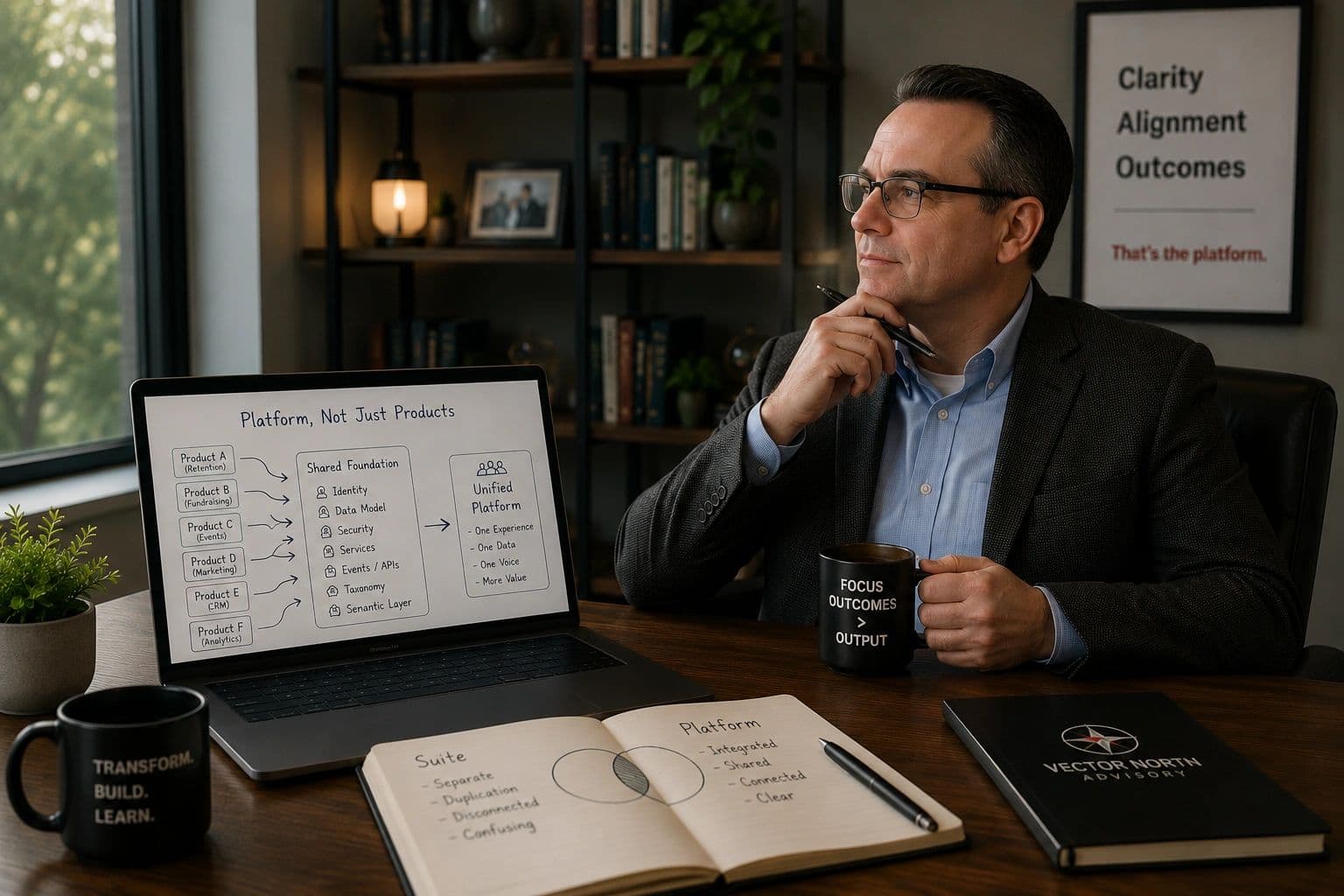
When a Suite Becomes a Platform
Spend enough time in enterprise software and you’ll eventually notice that certain words begin to lose their meaning. "Innovation" is one of them. "Transformation" is another. Lately, I think "platform" belongs on that l...