The Best Product Ideas Don’t Care Who Thought of Them
July 28, 2026
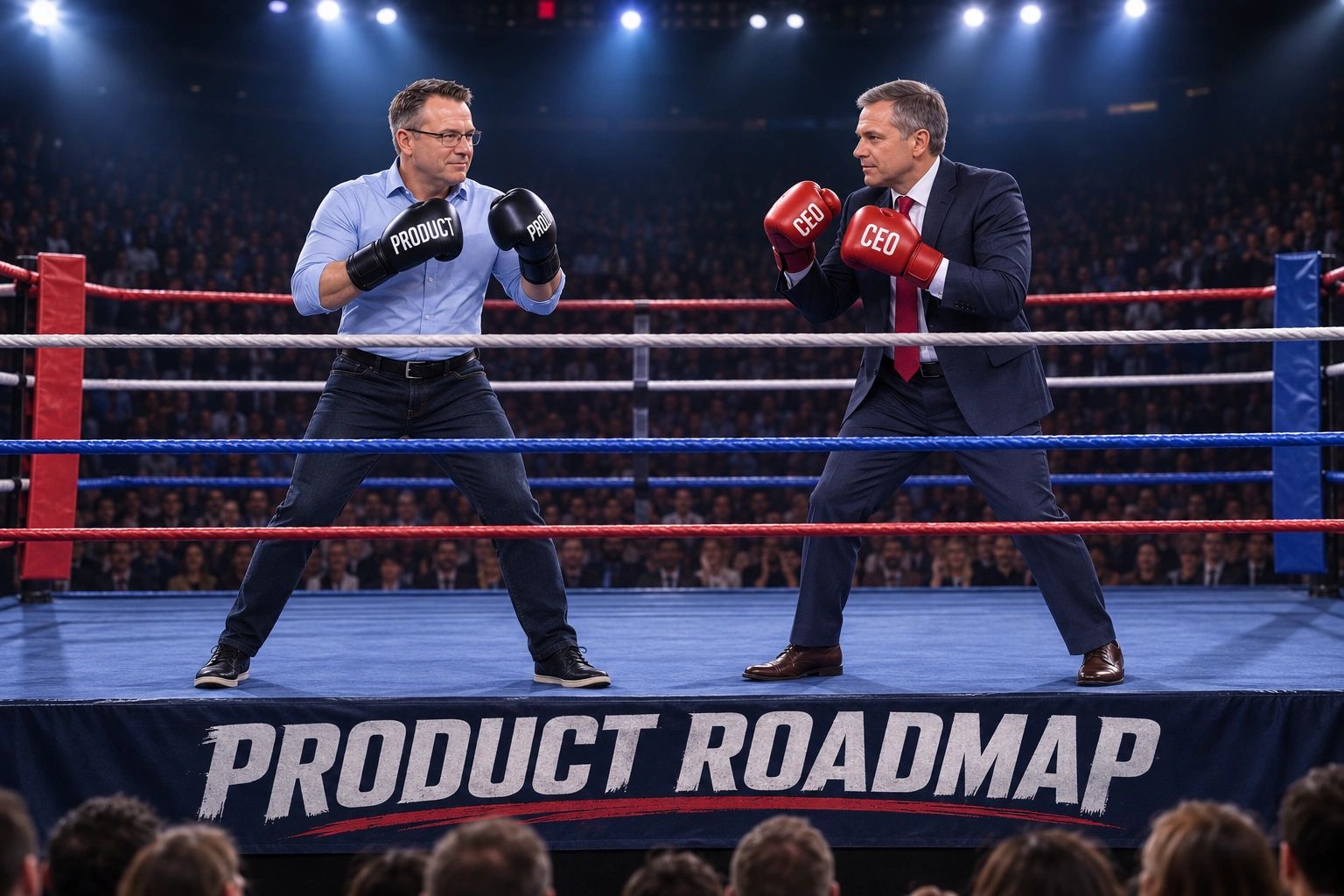
Every product leader eventually finds themselves in a familiar situation. Someone with influence has a strong opinion about what the product should do next, and the organization has to decide whether that idea represents an important opportunity or an expensive distraction. Sometimes the idea comes from the CEO. Sometimes it comes from Sales, Customer Success, Engineering, a board member, or a customer with a particularly loud voice. The source changes, but the underlying challenge does not. How do you make a good decision when the people involved bring different information, different incentives, and different levels of conviction to the conversation?
This question has come up several times in recent interviews, usually framed around a CEO who has strong product opinions. The implication is that an opinionated CEO creates a difficult situation for the product leader, especially when the CEO may be wrong. I understand why organizations ask the question, but I do not share the assumption behind it. I would be far more concerned about a CEO who had no opinions about the product, little curiosity about customers, or no understanding of the value Product Management brings to the organization.
A CEO should have a perspective on the product. They see parts of the business that most product leaders do not. They hear from investors, customers, prospects, partners, analysts, and board members. They understand the financial pressures facing the company, the strategic bets being considered, and the markets the organization may want to enter several years from now. That perspective can be enormously valuable, even when the proposed solution is not the right one.
The problem is not that CEOs have opinions. The problem begins when anyone, regardless of title, treats an opinion as a final decision before the organization has taken the time to understand the problem, examine the evidence, and consider alternatives.
I have never believed that Product Management’s role is to protect the roadmap from everyone else. That mindset turns Product into a gatekeeper and encourages an unhealthy view that ideas originating outside the product organization are interruptions. The best roadmaps I have worked on were shaped by contributions from across the company. Sales understood where deals were being lost. Customer Success saw where customers struggled after implementation. Engineering recognized technical opportunities and risks that were invisible to the rest of the organization. Marketing understood how the market perceived the product, while customers provided the most direct view into the problems they were trying to solve.
Product’s responsibility is not to make those perspectives disappear. It is to bring them together, separate the problem from the proposed solution, and help the organization decide where its next investment will create the greatest value. Sometimes that means telling someone that an idea is good, but the timing is not. Sometimes it means placing a request on the back burner because a higher-value opportunity needs to come first. Occasionally, it means challenging the CEO because the evidence suggests that maintaining the status quo carries more risk than changing direction.
I encountered exactly that situation at ClickDimensions while we were thinking through the future of our marketing automation and analytics capabilities. The company had built a successful product, and there was a reasonable argument for continuing to improve what already worked. The CEO was comfortable with that approach. His instinct was to stay close to the existing model, strengthen the core experience, and avoid moving too quickly into capabilities that customers had not yet explicitly requested.
My perspective was different. I believed the market was moving toward a more predictive form of marketing technology. Customers would still need reporting, dashboards, and historical analysis, but those capabilities would increasingly become table stakes. The larger opportunity was to help marketers understand what was likely to happen next and what actions they should consider taking. That meant exploring predictive scoring, campaign recommendations, proactive insights, and other capabilities that could reduce the time between seeing a problem and knowing what to do about it.
The idea did not begin with a customer asking us to build a predictive platform. Most customers describe their current pain more easily than they imagine a future experience they have never seen. Their feedback was focused on practical needs such as clearer reporting, easier access to campaign performance, and better visibility into results. Those requests were legitimate, but I did not believe they represented the full extent of where the market was heading.
This created a real strategic disagreement. The CEO’s position was grounded in the success of the current product, the immediate needs of customers, and the risk of moving ahead of adoption. My position was based on market direction, emerging technology, and the belief that analytics products would eventually need to do more than explain the past. Neither perspective was irrational, and neither of us had enough evidence to settle the question through debate alone.
Rather than treating the disagreement as a contest of authority, we worked to reduce the uncertainty. We examined product usage, spoke with customers, reviewed competitive movement, and explored how predictive capabilities could be introduced without forcing the company into a massive, irreversible investment. The work helped clarify that the opportunity was not to replace the analytics experience customers already valued. It was to build on that foundation and begin helping them make better decisions with the data they already had.
As we tested the concept and refined the experience, the value became clearer. Customers responded positively to capabilities that turned information into guidance, particularly when the recommendations were understandable and tied to actions they already needed to take. The predictive direction proved to be the right one, but the CEO’s resistance was still useful. It forced the idea to withstand scrutiny, become more concrete, and connect to customer value rather than remaining an exciting technology vision.
Being right about the direction did not mean I had been right about every detail. The challenge from the CEO helped shape how the capabilities were introduced, how much complexity customers would see, and how the new functionality would coexist with the product’s existing strengths. That’s exactly how healthy product organizations should work. Good ideas become great ideas when they’re challenged by thoughtful people who are genuinely trying to make them better.
I have also experienced the reverse. In another organization, a CEO who knew the market extremely well believed customers would embrace a new capability even though the available evidence suggested otherwise. Product usage data pointed in a different direction, and customer conversations did not show much enthusiasm. I presented what we had learned, and we debated the opportunity openly. He remained convinced that customers would respond differently once they could experience the idea rather than react to a description of it.
Instead of escalating the disagreement or pretending we had reached consensus, we agreed to run a small experiment. We created a prototype, placed it in front of customers, and watched how they used it. The CEO was right. Customers understood the value immediately once they could interact with the experience, and their reaction was far stronger than anything we had heard during interviews.
That experience was just as important as the one at ClickDimensions because it reinforced that evidence has limits. Usage data tells us what customers are doing today, but it cannot always reveal how they will react to something new. Interviews help us understand problems, but customers can struggle to evaluate an experience they have never seen. Executive intuition can identify opportunities that do not yet appear in the numbers, especially when that intuition has been shaped by years of direct exposure to a market.
Once the experiment showed that the CEO’s instinct was correct, my responsibility was to commit to the direction rather than continue defending my earlier position. We still improved the user experience and adjusted how the capability would be implemented, but the central decision was no longer in doubt. Changing my mind was not a loss. It was proof that the process had worked.
These experiences are why I do not think Product Management should be measured by how often it wins disagreements. A product leader who always gets their way may be operating in an organization where challenge is discouraged, where evidence is selectively presented, or where Product has become overly protective of its authority. None of those conditions leads to consistently strong decisions.
The healthier objective is to improve decision quality. That requires a culture where people can bring strong opinions without expecting automatic agreement, where ideas can be challenged without becoming personal, and where the organization is willing to test its assumptions before committing significant time and money. It also requires product leaders who can say, “That is a good idea, but now is not the right time,” and explain the tradeoff in terms the rest of the business understands.
The roadmap should not be created in a vacuum, but neither should it become a collection of the loudest requests from across the company. Product’s value lies in synthesizing those inputs, identifying patterns, evaluating the opportunity cost, and helping the organization distinguish between what is interesting and what is important. That work demands judgment, curiosity, and enough humility to recognize that good ideas can originate anywhere.
The best product organizations are not the ones where the CEO always wins or where Product controls every decision. They are the ones where conviction and evidence can coexist, where disagreement leads to learning, and where people are willing to support the strongest idea once it has earned that support. The title on the person who proposed it matters far less than the value it ultimately creates for customers and the business.
Wishing you all the best
Mike
Continue exploring
May 4, 2026
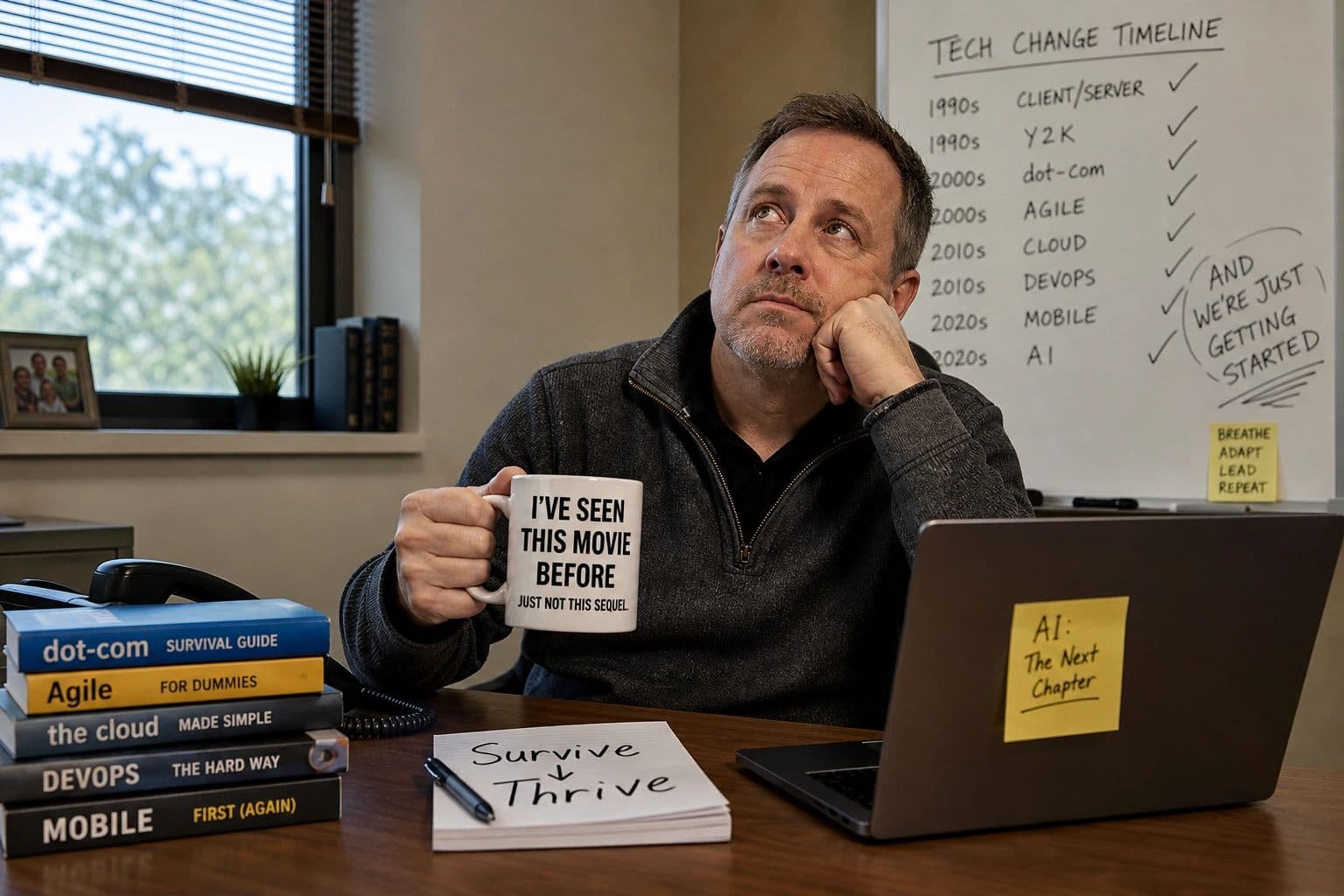
I’ve Seen This Before. Just Not This Fast.
I’ve been around the block a few times. (Yeah, yeah, I know...)

October 28, 2025
The Art of Saying No
There’s a special kind of chaos that comes from saying “yes” too often. It’s the chaos that has you answering Slack messages at 9:47 p.m. while pretending to watch Ted Lasso for “self-care.” It’s the chaos that fills you...
September 3, 2025
Too Tired to Inspire, Too Stubborn to Quit
(Sometimes heroic effort looks like just getting out of bed.)