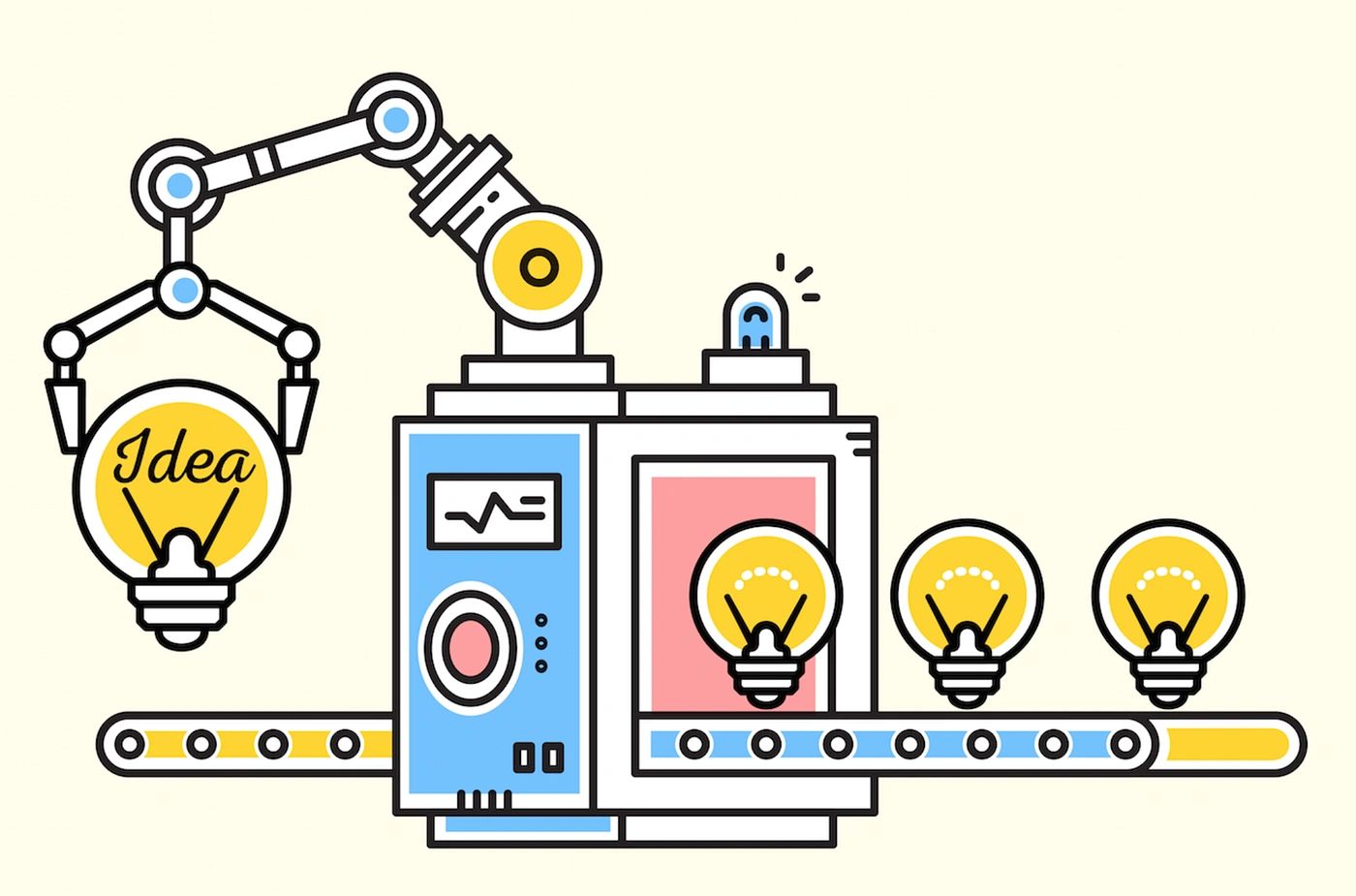
So many ideas, so little time. It can become overwhelming when you're receiving input (ideas) from multiple sources such as Sales and Support, Executives, partners, customers, and Product colleagues. Not to mention your own ideas formulated from company objectives, the competitive landscape, and market direction. Wowza! So, how do you quickly triage these ideas and separate the wheat from the chaff so to speak?
Luckily there are many techniques that will help you do so. In this post, I am going to share 10 of my favorites and briefly describe each one. I've also included links on each technique to get additional information from various sources if you are interested in learning more.
Without further ado, let's explore these ideation techniques.
1. Design Thinking: Putting Users at the Core
Design Thinking is a human-centered approach that emphasizes understanding the user's perspective, needs, and challenges. It involves empathy, ideation, prototyping, and testing. By immersing yourself in the user's environment, you gain insights that guide the creation of products that truly address their requirements.
For more information click here
2. Mind Mapping: Visualizing Possibilities
This is a technique that's in my top 3 and I use it for many things beyond Product Management, Mind mapping is a powerful tool for brainstorming and organizing thoughts. Starting with a central idea, you create a visual representation of related concepts and potential connections. This technique helps in breaking down complex problems, identifying relationships between ideas, and generating a holistic view of the ideation landscape.
For more information click here
3. Rapid Prototyping: Learning by Doing
Rapid prototyping involves creating tangible models quickly to test and iterate on ideas. This hands-on approach allows teams to visualize concepts, gather feedback, and make improvements in an agile manner. Rapid prototyping accelerates the learning process and minimizes the risk of investing in a concept that may not resonate with users.
For more information click here
4. Cross-Functional Collaboration: Harnessing Collective Intelligence
Cross-functional collaboration involves assembling a team with diverse skills, backgrounds, and expertise. This diversity sparks creativity and ensures a more comprehensive exploration of ideas. By integrating insights from various disciplines, teams can develop well-rounded solutions that consider multiple perspectives.
For more information click here
5. Silent Ideation: Unleashing Individual Creativity
Silent ideation is a technique where participants independently generate ideas before sharing them with the group. This allows each team member to contribute their unique perspective without being influenced by others. Silent ideation encourages individual creativity and ensures a broader range of ideas.
For more information click here
6. 20-20-20 Rule: Structured Time Management
While not an ideation technique per-se,the 20-20-20 rule provides a structured approach to time management during ideation. Allocating 20 minutes each to problem definition, idea generation, and idea evaluation ensures a balanced and focused process. This rule prevents spending too much time on any single phase, promoting efficiency and progress.
For more information click here
7. Brainstorming: Unleashing Collective Creativity
Brainstorming is a collaborative technique that encourages the free flow of ideas within a group. By creating an environment where all ideas are welcome, regardless of feasibility at the outset, brainstorming sparks creativity and innovation. The synergy of the team enhances the potential for groundbreaking solutions.
For more information click here
8. Storyboarding: Visualizing the User Journey
Storyboarding is a visual technique that involves creating a sequence of illustrations to represent the user journey. It helps in visualizing how users will interact with a product or service, identifying pain points, and envisioning potential improvements. Storyboarding is an effective communication tool within the team, aligning everyone on the user experience.
For more information click here
9. Five Whys: Digging to the Root Cause
The Five Whys is a technique that involves asking "why" five times successively to uncover the root cause of a problem or need. By systematically probing deeper into the reasons behind an issue, teams can identify the core problems and address them directly, leading to more targeted and effective solutions.
For more information click here
10. 6-3-5 Method: Structured Group Ideation
The 6-3-5 method is a structured ideation technique where six participants generate three ideas in five minutes, and then pass their ideas to the next person. This rapid-fire approach ensures a continuous flow of diverse ideas within a short timeframe, leveraging the collective creativity of the group.
For more information click here
Wrapping Up
Integrating these diverse ideation techniques forms a holistic strategy that caters to various aspects of the creative process. The synergy of these methodologies allows teams to approach product ideation from different angles, fostering a culture of innovation, adaptability, and continuous improvement. Embracing a combination of these techniques is key to navigating the complexities of product development and achieving sustained success in an ever-evolving market.
Thanks for reading and happy ideating!
All the best
Mike
Continue exploring

August 17, 2026
When Architecture Becomes Experience
One of the more interesting things I’ve noticed over the years is that software companies and customers often define the word platform very differently.

July 28, 2026
The Best Product Ideas Don’t Care Who Thought of Them
Every product leader eventually finds themselves in a familiar situation. Someone with influence has a strong opinion about what the product should do next, and the organization has to decide whether that idea represents...
July 21, 2026
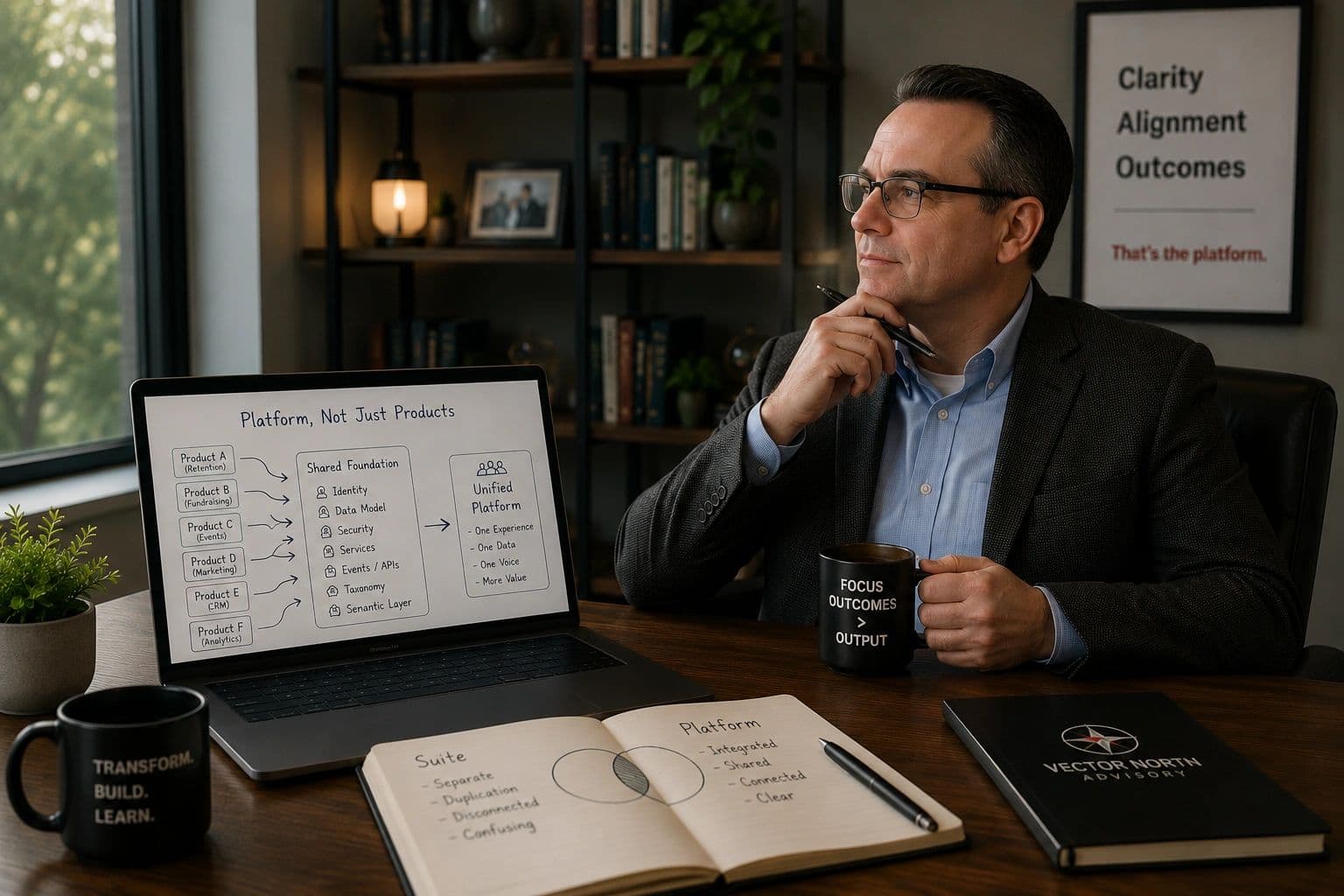
When a Suite Becomes a Platform
Spend enough time in enterprise software and you’ll eventually notice that certain words begin to lose their meaning. "Innovation" is one of them. "Transformation" is another. Lately, I think "platform" belongs on that l...