The Human Need To Reciprocate & How That Applies To Customers
June 9, 2021
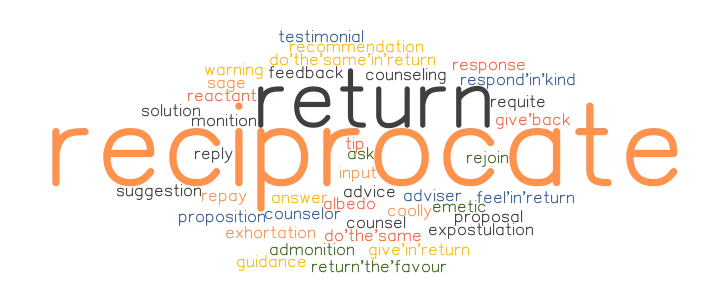
I've been on a kick lately reading books on psychology and philosophy in an attempt to better understand "why people are the way they are". It's always been somewhat of a fascination to me. The interaction of human beings, emotional responses, thought processes, etc. Almost to the degree that the world is one large experiment for my observation, and sometimes amusement.
On a recommendation from a colleague, I picked up a book by Jonathan Haidt called The Happiness Hypothesis.It's a great read and I'd highly recommend it. Haidt presents ten ideas that have persisted for millennia, but are now backed up by scientific research, and how they've caused civilization to flourish and our species to evolve. Ideas such as virtue, love, adversity, happiness, divinity, and reciprocity are some of the ideas covered. Not only is that last idea very difficult to pronounce (at least for me) it is the subject of this blog post.
"Reciprocity
The practice of exchanging things with others for mutual benefit"
In his book, Haidt explains how interactions between humans are always viewed as a zero-sum game. Meaning, if I give you something, you feel obligated to give me something in return, otherwise, there is a perceived debt. There are of course exceptions to the rule, aka "the takers", but they are met with collective contempt. The societal norm is the equilibrium of give and take. What I give you doesn't have to be physical for you to feel the need to reciprocate. Think about your interactions with a colleague where you've shared a story (gossip) with them and they immediately respond in kind. Why is that? Is it because they're going for one-upmanship? Perhaps. But more probably it's because they subconsciously feel compelled to provide something in return for the information that you've given to them. I certainly haven't explained this as eloquently as Haidt does in his book, spending an entire chapter on the subject, but I believe you get the gist.
I was intrigued by his narrative on reciprocity and it started me thinking. Does this need also apply to customers? They are, after all, human beings. If I "give" something to a customer, will they be more inclined to respond to me when I reach out in future? Will they participate in the zero-sum game as well?
As I contemplated this notion, I began to reflect on past interactions that I as a Product Manager have had with my customers. I'm a strong believer that the best source of information comes directly from your customer base (see my blog entitled "Too Much Industry Focus & Not Enough On The Customer" for more on this.). I can honestly say that rarely have I had a customer turn down an offer to participate in a test group, respond to a survey, accept a one-on-one interview, etc. Now you could argue that I've just had awesome customers (which they are), and that most people would jump at the opportunity to provide feedback to a vendor. But quite often, my ask of them goes beyond a few minutes of their time. I've asked some to participate in weeks long private preview programs that require multiple feedback sessions and the completion of documentation, and they happily oblige. Another data point that supports the assertion that there's more at work here than just having awesome customers is the fact that other groups within past organizations have not had nearly the same success rate that I have in connecting with customers. Marketing, Support, even other Product Managers have struggled to get more than a handful of responses, while I've managed to connect with far more. So what's the secret to this success? It's give and take. It's reciprocity at work. But what is it that I am giving to customers you might be asking yourself, and here's the not so big reveal. I make it a habit to reach out to customers from time to time. Not with an ask of them. Not trying to sell them something. Just to share information that I believe might be relevant to them. It could be a sneak peek at my product roadmap. Perhaps it's an article that I read which I feel may benefit them. Or it could just be me checking in to see how they're doing and ask if there's anything that I can do for them. That's it. That's all there is to it. But by creating this dynamic between us, I am depositing credits into their "reciprocity bank". In the future, when I need to ask a favor of them, they are more likely to respond favorably. It also helps that I truly do care about them and their success, so I am not being disingenuous with my outreach.
Recently, I received an unsolicited email from a sales person. We have no prior relationship and therefore I had no reason to respond to their email. I quickly scanned their note and was about to click the delete button when something caught my eye. The sales person mentioned my blog and how she enjoyed reading my post on empathy. She only spent a couple of sentences on the topic, but she gave me two things in those few words. First, she gave me a positive emotion, she made me feel good. Secondly, she gave me her time. That is, the time she spent reading my blog. The zero-sum game was now in her favor and I was compelled to rebalance things. I responded to her email, thanking her for reaching out and taking the time to read my blog. I explained that those two sentences in her email were the reason I responded, but unfortunately I had no need for the product they were promoting. Balance restored.
Think about reciprocity in your organization. Does your marketing team send out material with helpful information to your customers that would benefit their business, or is the content always an attempt to promote your products? Do your account managers reach out to your customers to see how they're doing or share a piece of interesting information, or do they only reach out when it's time to renew or pay the bill? Certainly, your interactions with your customers should promote your products and services, but your outreach should not always be for this purpose. Try to provide content from time to time that benefits your customer, with no call to action on your part. (gasp!). I know you will be amazed at how it changes the dynamic between your organization and your customers.
This giving also enhances the way customers perceive your organization. You're not just another vendor trying to sell another product and add another dollar to your bottom line. Those vendors are a dime a dozen. Differentiate yourself and become a trusted partner who has the best interests of the customer at heart. Care about the success of their business and help them to succeed. It's a win-win. (see, balance)
So whether you're a Product Manager, Marketer, an Account Manager, or anyone else that interacts with customers, go ahead and deposit some credits into their reciprocity bank. You'll be amazed at the difference it makes for you, and for your customer.
Information given...now you owe me, so subscribe to this blog. ;-)
Wishing you all the best
Mike
Continue exploring

August 17, 2026
When Architecture Becomes Experience
One of the more interesting things I’ve noticed over the years is that software companies and customers often define the word platform very differently.

July 28, 2026
The Best Product Ideas Don’t Care Who Thought of Them
Every product leader eventually finds themselves in a familiar situation. Someone with influence has a strong opinion about what the product should do next, and the organization has to decide whether that idea represents...
July 21, 2026
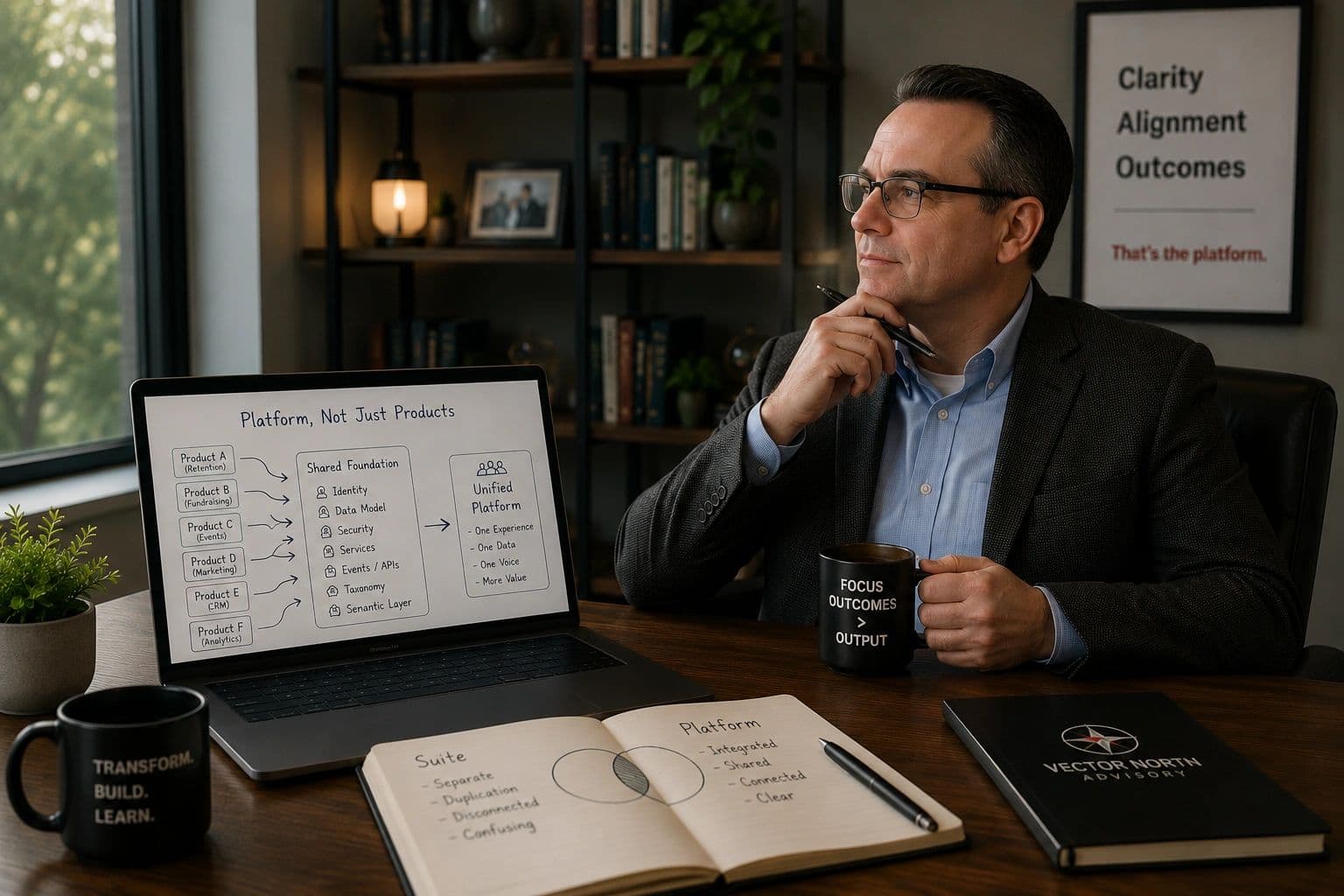
When a Suite Becomes a Platform
Spend enough time in enterprise software and you’ll eventually notice that certain words begin to lose their meaning. "Innovation" is one of them. "Transformation" is another. Lately, I think "platform" belongs on that l...