I’ve always believed in being humble and kind. It’s more than a motto for me, it’s a mantra. But what continues to surprise me is just how powerful those two words can be in the world of business. For a long time, like many shaped by 90s hustle culture and the myth of the lone genius CEO (*coughs*), I thought success came from sharp elbows and sharper strategies. Kindness? That felt more like a personality trait than a performance driver. A nice to have, but hardly a lever for results.
Then I led a team.
And in no time at all, I realized that strategy without kindness is like a plan with no people. It might look good on paper, but it doesn’t move anyone to act.
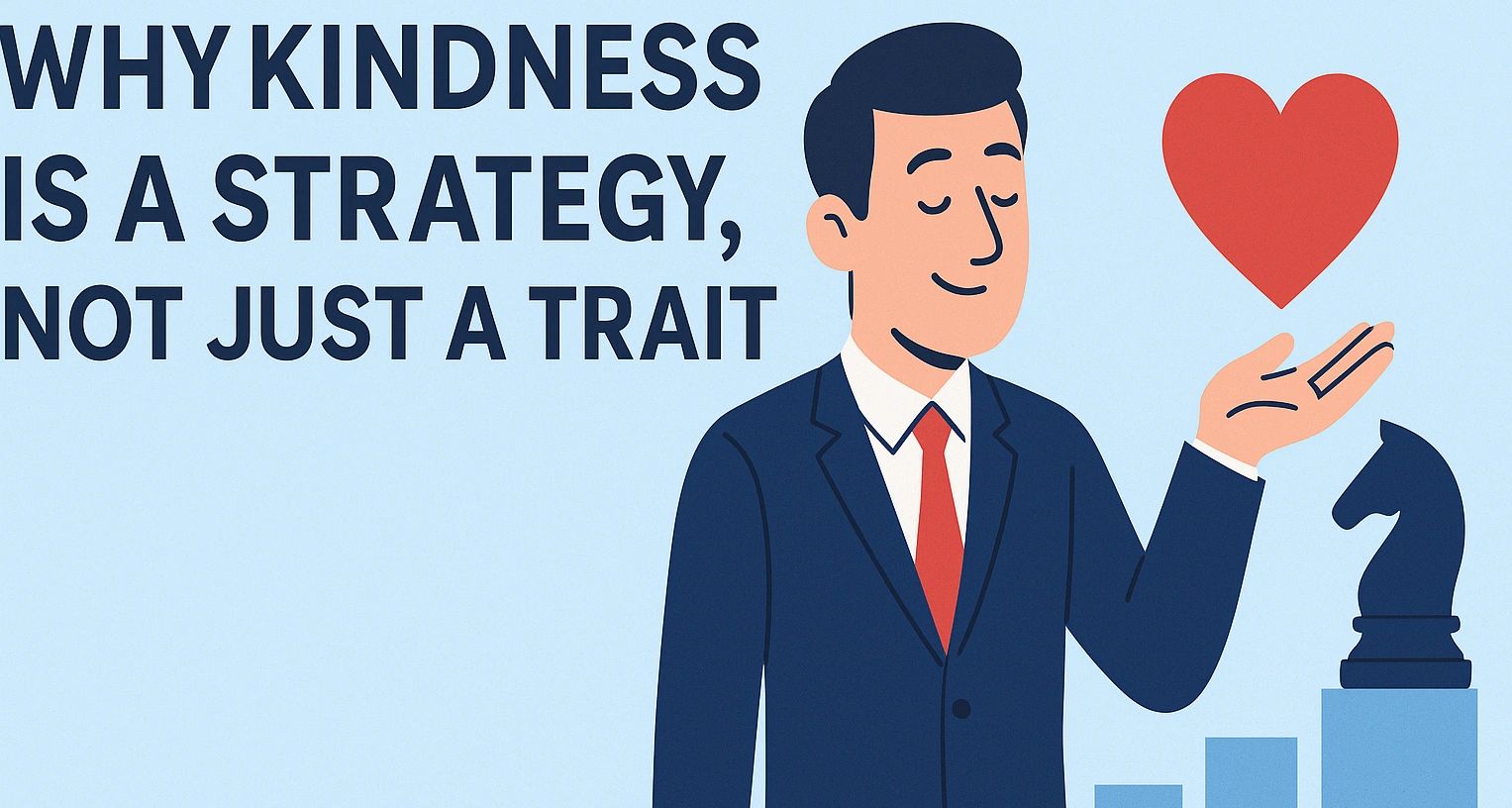
This post is about reframing kindness, not as a soft skill, but as a strategic one. One that builds trust, attracts talent, fuels innovation, and creates cultures that win for the long haul.
Kindness Has a Higher Conversion Rate Than Bravado
Have you ever worked with someone who thought yelling made things go faster? (I have) Or who believed “tough love” meant skipping both the love and the tact? (Ditto)
Spoiler...those people don’t get far anymore.
Sure, in the short term, bluster might scare someone into compliance. But kindness? Kindness creates buy-in. It gets people to want to follow you, not just tolerate. And in a world full of resumes and LinkedIn flexing, genuine connection still moves the needle.
When you treat people with respect and empathy, it makes them more likely to say "yes", more willing to go the extra mile, and far less likely to be polishing up their LinkedIn profile over lunch.
In other words, kindness converts. And conversion is the holy grail of strategy.
Kindness Reduces Turnover (and HR Blood Pressure)
Picture your best boss. Chances are, they weren’t the smartest person in the room (though they may have been). They were probably the person who made you feel seen. Heard. Respected.
Kindness doesn’t mean avoiding hard conversations. It means delivering them in a way that doesn’t torch relationships or morale.
Here’s the strategy part: Replacing an employee costs, on average, 1.5 to 2 times their annual salary. That’s a budget line that kindness can help you avoid. Empathetic leaders build loyalty. They create environments where people stay, not because they have to, but because they want to.
Kindness, then, becomes a cost-saving mechanism. It keeps people from burning out or burning bridges. It’s cheaper than pizza parties and far more effective than yet another mandatory morale-boosting webinar titled “Fun With Excel!” (Yeah, I lived through this one.)
Kindness Scales (No, Really)
There’s a common myth that kindness doesn’t scale. That it only works in small teams or early-stage startups where everyone’s still on the same Slack channel and remembers each other’s time zones.
Wrong. (Insert buzzer sound)
The best companies in the world institutionalize kindness. They build it into processes, policies, and culture. Patagonia offers on-site childcare. Microsoft invests in empathy training. Even Google (in its pre-ad empire innocence) created a culture of openness and support that helped it scale from a garage to global dominance.
Systems can be kind. Processes can be kind. Automated emails, onboarding documents, feedback forms, all of them can be designed to prioritize humanity without sacrificing efficiency.
And when kindness becomes part of the company OS, it doesn’t get diluted. It gets amplified.
Kindness Is the Best Form of PR
Here’s a radical idea. Instead of spending thousands on a PR firm to spin bad news, you could… just treat people kindly in the first place.
Reputation is no longer managed in quarterly press releases. It’s shaped in real-time, in Slack threads, Glassdoor reviews, LinkedIn posts, and late-night DMs. And word travels fast. Kind leaders get talked about. And not in the hushed, terrified tones reserved for the corporate tyrants of yesteryear.
Think of kindness as proactive reputation management. When you invest in relationships, when you act with integrity, and when you treat people well even when it’s inconvenient, you build an army of advocates who will sing your praises unprompted.
That kind of organic brand-building? Priceless. And very strategic.
Kindness Enhances Decision Making
Let me introduce you to the Quiet Power of Not Being a Dick.
When leaders foster psychological safety, the sense that people can speak up without fear of punishment, they get better information. More perspectives. Smarter decisions.
It doesn’t take a Wharton MBA to know that hearing the truth beats living in an echo chamber.
Kindness isn’t about being agreeable. It’s about creating space where ideas can be debated without personal attacks. It’s the difference between, “That idea sucks,” and “I’m not sure that approach gets us where we need to be, can we explore another path?” (See my post on Creating a Safe Team Environment for more on this. Part 1 & Part 2)
One shuts people down. The other opens up possibilities. The strategic move is obvious.
Kindness Wins Customers (and Keeps Them)
Customer experience isn’t just about how fast you reply to tickets or how many emojis your chatbot uses. It’s about how you make people feel. And people, generally speaking, like to feel valued.
A customer service rep who says, “Let me take care of that for you” is delivering kindness. A policy that assumes the customer is telling the truth? That’s operationalized kindness.
And here’s the kicker: Kindness makes you money.
According to the Harvard Business Review, customers who had the best past experiences spend 140% more compared to those who had the poorest past experience. Kindness literally boosts lifetime value.
You could call that emotional ROI. Or you could just call it smart business.
Kindness Is Contagious (in a Good Way)
One kind act can shift a team dynamic.
A well-timed “thank you” can spark a ripple effect that changes the tone of an entire meeting. A leader who owns a mistake gives others permission to do the same. Lead by example.
Kindness isn’t just a trait. It’s a behavior. And behaviors, when modeled consistently, go viral.
Great cultures aren’t built on ping-pong tables and kombucha taps (not a fan of kombucha by the way). They’re built on the everyday micro-moments where people choose compassion over convenience. And those choices, when repeated, create a culture that no branding exercise can manufacture.
Kindness Makes You a Better Negotiator
This one sounds counterintuitive, especially to those who think “negotiation” means channeling their inner mob boss.
But here’s the truth: Empathy gives you leverage.
When you understand the needs, fears, and goals of the person across the table, you can craft better deals. You can find win-wins. And you can walk away from the table with your dignity intact, and equally as important, theirs too.
Kindness doesn’t mean rolling over. It means playing the long game. People remember who treated them well. And in business, relationships often outlast contracts.
So, What Does Kindness-As-Strategy Look Like in Practice?
Here are a few ways that organizations can embed kindness into their strategic DNA:
- In Onboarding: Include welcome notes from teammates, not just IT checklists.
- In Feedback: Train managers to deliver honest feedback with empathy, not condescension.
- In Hiring: Treat every candidate like a human, even the ones you don’t hire.
- In Meetings: Encourage active listening and curiosity instead of one-upmanship.
- In Performance Reviews: Focus on strengths and development opportunities instead of pure critique.
- In Layoffs: Communicate transparently and compassionately. Don’t ghost people.
(Feel free to drop additional tactics into the chat to help others.)
The common denominator in all of these? Intentionality.
Kindness as a strategy isn’t random. It’s deliberate. It’s designed. It’s baked into the architecture of how decisions are made and how people are treated.
But Isn’t This Just Soft Stuff?
I get it. If you come from the old-school, Jack Welch, KPI-obsessed school of business, all this might sound like fluff.
But here’s the deal: The “soft stuff” is the hard stuff. Anyone can slash budgets or install a new CRM. Building trust? Inspiring loyalty? Creating teams that don’t implode under pressure?
That’s the real work.
And it pays dividends. Companies with high levels of employee engagement (a.k.a., places where people feel respected and valued) outperform their peers in earnings per share. They have lower turnover, higher productivity, and stronger reputations. I know. I live this every day in my role at Bloomerang. A company that has truly integrated kindness into the fabric of it's corporate DNA.
That’s not soft. That’s strategic advantage.
Final Thoughts: Leading With Kindness Is Not Naive, It’s Bold
Being kind in business doesn’t mean being a pushover. It doesn’t mean saying yes to everything or avoiding hard calls. It means recognizing that people are your most valuable asset, and treating them accordingly.
Kindness, in this sense, is a high-skill move. It requires emotional intelligence, situational awareness, and courage.
And here’s the punchline: The world is watching.
Employees are watching. Customers are watching. Partners, investors, even competitors are watching.
So lead with kindness. Not because it’s trendy. Not because it looks good in the annual report. But because it works. Because it’s right. And because, in a world that often confuses loud with strong, the quiet power of kindness might just be your sharpest strategic edge.
One final thought on kindness...
Kindness is a quiet force that softens even the hardest edges of life. It costs nothing, yet can change the course of someone’s day, or even their life. In a world moving fast and fraying at the edges, kindness is the one act that always multiplies when shared. It’s not weakness; it’s a superpower dressed in humility.
One more time...
Kindness is not a weakness; it’s a superpower dressed in humility.
I love that.
Wishing all of you the best
Mike
Continue exploring

October 28, 2025
The Art of Saying No
There’s a special kind of chaos that comes from saying “yes” too often. It’s the chaos that has you answering Slack messages at 9:47 p.m. while pretending to watch Ted Lasso for “self-care.” It’s the chaos that fills you...
September 3, 2025
Too Tired to Inspire, Too Stubborn to Quit
(Sometimes heroic effort looks like just getting out of bed.)

August 4, 2025
Why Admitting ‘I Don’t Know’ Made Me a Better Leader
Spoiler: It involved a lot of nodding, coffee, and Googling under the table.